Counter stools for a counter at 900–950 mm
The counter height is fixed by the till, the grinder and the display case. The stool follows it: a 650 mm seat for a 900 to 950 mm counter, with the footrest at the height where feet actually land.
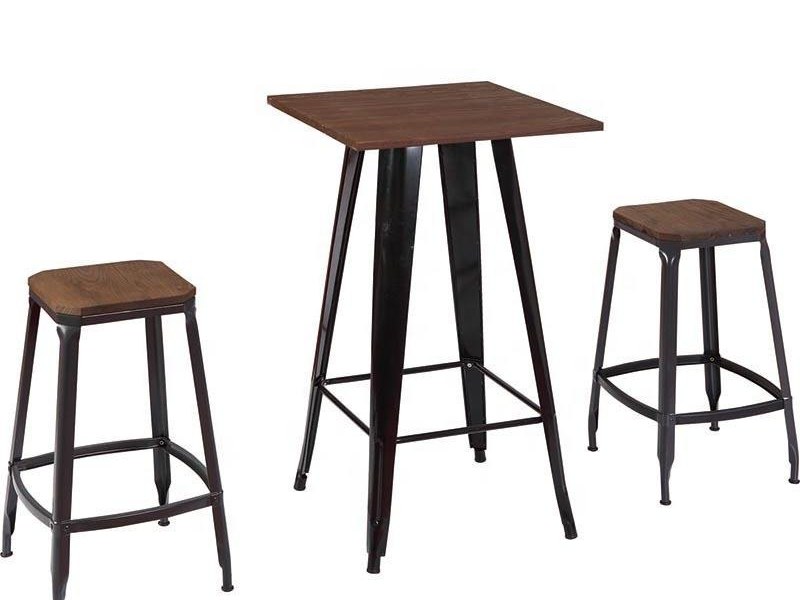
Counter stool models in current production
Six hundred and fifty, and not seven hundred and fifty
Cafe counters sit at 900 to 950 mm — low enough that the person behind it can lean across and hand over a cup. The stool that works with it has a 650 mm seat. Seats at 750 mm against that counter put the guest's knees into the counter front and their cup at chin height, and it is the single most common mistake in a cafe refit, because 750 mm is the height that gets quoted by default.
The gap that matters is between the seat and the underside of the counter. Around 250 mm is comfortable for a whole coffee; below 200 the guest turns sideways to drink.
| Seat height | 650 mm standard · 620 / 680 mm on request |
|---|---|
| Pairs with counter top | 900–950 mm |
| Overall height | 880–1030 mm depending on the back |
| Footrest above floor | 230–270 mm, welded into the frame and ground flat |
| Seat pan | 380–420 mm deep and slightly dished |
| Frame | Solid ash, steel tube, or aluminium |
| Load rating | 150 kg on the assembled stool |
| Minimum order | On request · typically 10–20 pieces |
| Production | 15–30 days after sample approval |
Backless or low-back, decided by the aisle
Backless stools slide fully under the counter, so the aisle behind stays clear when nobody is sitting. In a narrow shop — under 3.5 m wide — that is the whole argument, and it also stops the window looking blocked from the street.
Low-back stools are the better seat and the worse neighbour: the back takes up 150 to 200 mm behind the seat, and in a tight run that is the difference between a guest passing behind and a guest turning sideways. Use it where the counter has 1.2 m or more behind it, or at the end of a run where the aisle widens.
Where a counter stool fails
The footrest joint
Footrests bolted onto the legs after assembly work loose inside a season — all the load goes through two bolts into a thin wall. We weld it into the frame, grind the weld flat and polish, so it reads as one piece of metal because it is.
The drop, not the sit
Guests drop onto a stool from standing height. That impact goes down the legs, not across the seat, so the figure that matters is the assembled stool: our 150 kg is tested on the whole unit, frame and joints included.
The seat that never dries
Cafe seats meet milk and syrup, both of which soak into stitching. Flat PU with welded seams wipes clean; a stitched pad traps it, and the seam goes dark within six months.
How many stools a counter takes
Allow 600 mm of counter run per stool. At 2.4 m the counter takes four, not five — five puts elbows in the way of the till. Leave 400 mm clear at each end so the last stool is not jammed against a wall, and keep the first stool 300 mm clear of the display case door.
Our counter is 1050 mm — what do we do?
Do the stools have to be fixed to the floor?
Can we get a swivel?
Tell us the counter height
Send the counter height measured with the top fitted, and the length of the run. We come back with stool count, seat height and a price, usually in three working days.